Educating a girl is not charity. It is the foundation everything else stands on.
In the villages we serve, a girl's education is not a given. It is negotiated year by year against everything else a family has to pay for. Here is why APED treats it as an investment, and why it never travels alone.
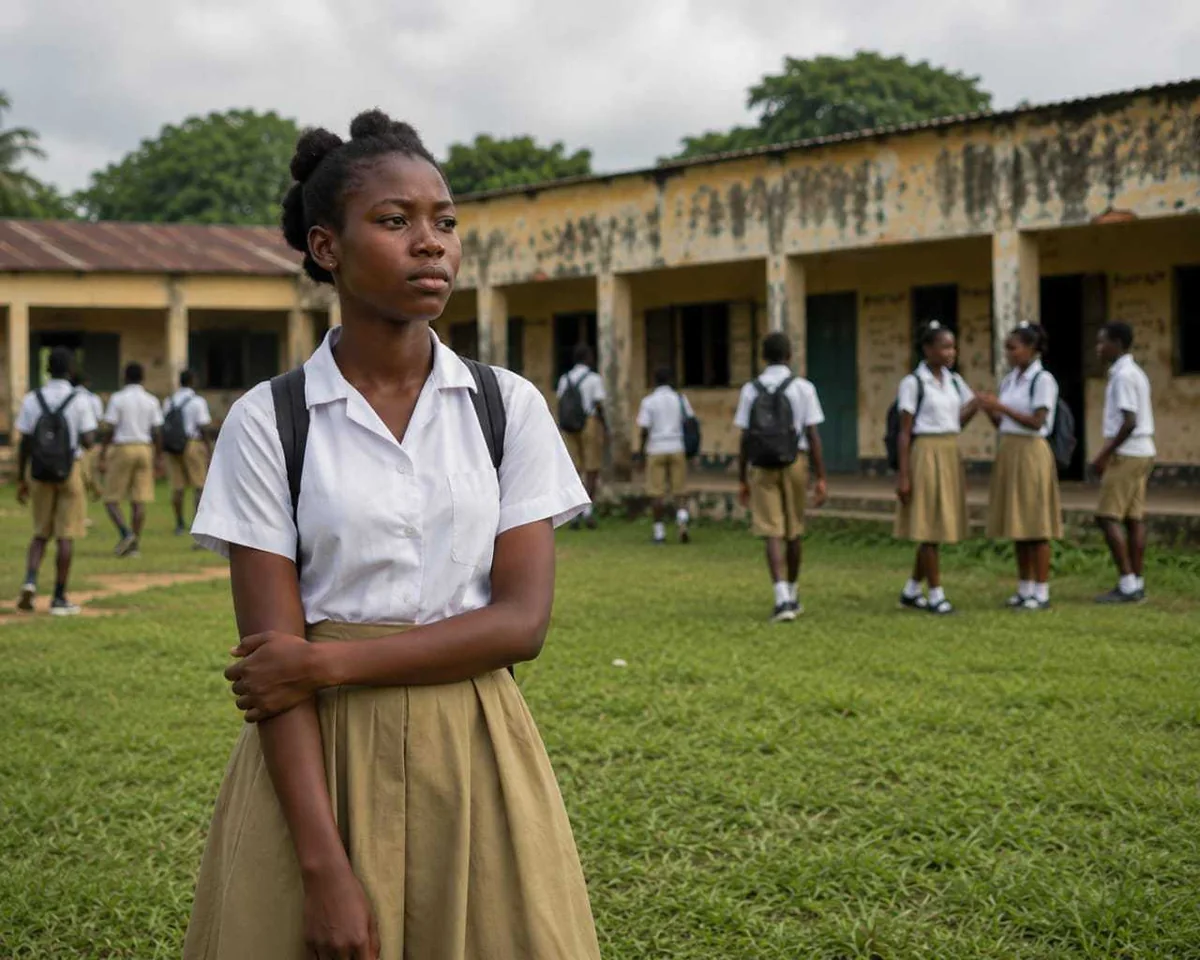
Every girl deserves the chance to learn, to grow, and to decide for herself what her life will look like. In the rural communities of the Avé Prefecture, that chance is not guaranteed. It is weighed, season by season, against school fees, the walk to the classroom, and the work waiting at home.
People sometimes call this work charity. It is the wrong word. Charity is something you hand over and walk away from. What a community gets back when a girl finishes school is something else entirely. And it keeps arriving long after the fees are paid.
What actually keeps a girl out of school
It is almost never a lack of will. The girls we meet want to be in the classroom, and their families want them there. What stands in the way is ordinary, stubborn, and largely a matter of arithmetic.
- Cost. Fees, uniforms, and supplies, plus the quiet expense of a child who is studying instead of contributing to the household.
- Distance. A school far enough away that the walk itself becomes a daily argument against going.
- Early marriage. A future decided for a girl before she has finished deciding it for herself.
- Narrow opportunity. When there is no visible path from the classroom to a livelihood, school starts to look like a luxury rather than a plan.
None of these are failures of ambition. Change the arithmetic and girls stay in school. That is the whole of our theory, and most of our work.
One girl learns. Everyone standing near her feels it.
A girl who stays in school does not hold that gain by herself. She becomes someone her household can lean on, and a reason things begin to shift in the village around her.
Educated women are more likely to keep their own children healthy, to put younger siblings back in a classroom, to earn and spend inside the local economy, and to interrupt a cycle of poverty that would otherwise repeat itself in the next generation. One school place, and the return spreads sideways through a household and outward through a village.
"If we want stronger communities tomorrow, we must invest in girls today." Kokou Delali, Executive Director, APED Association
Education is one of four things we do. They only work together.
Because we are building the Kpotamé Rural Health Center for Women & Children, APED is sometimes read as a health organization. We are glad the center draws attention. It has never been the whole of the work.
A girl does not live her life in sectors. She lives in one village, in one household, on one budget. So we work the way she lives.
Education & sponsorship
Family sponsorship that keeps children in school. Not simply enrolled, but staying, finishing, and going further.
Girls' & women's empowerment
Vocational training in sewing, hairdressing, and entrepreneurship, so a young woman leaves with a trade she owns.
Rural healthcare
Maternal, pediatric, and emergency care through the health center taking shape at Kpotamé.
Water, sanitation & hygiene
Clean water and safe sanitation for households, because a sick family cannot keep a child in a classroom.
These four are not a menu. They hold each other up. A clinic keeps a family well enough to keep a child enrolled. Water closer to home returns hours to a girl's day that were spent fetching it. A mother with a trade can cover school costs without choosing between her children. And the girl who finishes school is, more often than anyone, the one who insists on all of it for the household that comes after her.
Between 2023 and 2025 we supported more than 450 children through education. 256 of them are girls. That number is the clearest answer we can give to anyone who asks whether a girl's place in school is really negotiable here. It is, every year, in most households we walk into. And it is the negotiation we exist to win.
through education
children supported
empowerment programs
through water & sanitation
What this looks like in the Avé Prefecture
APED has worked in the Maritime Region of Togo since its founding on October 18, 1998, led by a team that lives in the communities it serves. The work is unglamorous and specific: a sponsorship that covers the term a family could not; a sewing apprenticeship that turns into an income; a village assembly where people learn what they are entitled to ask for.
The Kpotamé Rural Health Center for Women & Children sits inside that same effort, serving 18,000 people across 17 villages who currently have no health facility of their own. It is the largest thing we are building. It is not the only thing we are doing.
Throughout, the principle stays the same one our partners hear on their first visit: the community leads, and we walk alongside. Partnership, not dependency.
No organization does this alone
A girl finishing school is not the achievement of one association. It takes teachers who keep a place for her, community leaders who defend her right to sit in it, local and national government, and partners abroad who believe a child's chances should not be decided by where she was born.
That is the invitation. Not to rescue anyone. The families of Avé are not waiting to be rescued. It is to take a share in work that is already underway.
A shorter version of this article first appeared on APED's Medium page on August 7, 2026. This version was written for apedassociation.org.
Give a girl the chance to finish.
She will do the rest.
Whether it is $25 or $5,000, every contribution is tracked, reported, and felt by real families in Kpotamé. You can also give your time: APED works with volunteers in education, health, and community outreach.